Best Facial Recognition Cameras 2025, As we advance through 2025, security cameras are no longer just passive recorders; they have become intelligent guardians of our homes. The most significant leap in this evolution is the refinement of facial recognition technology. Today’s top cameras can distinguish between family members, friends, delivery personnel, and unknown strangers, dramatically reducing false alarms and providing you with highly specific, actionable alerts. Get notified when friends and family visit from some of the best facial recognition security cameras like Lorex, Wyze, and Nest.

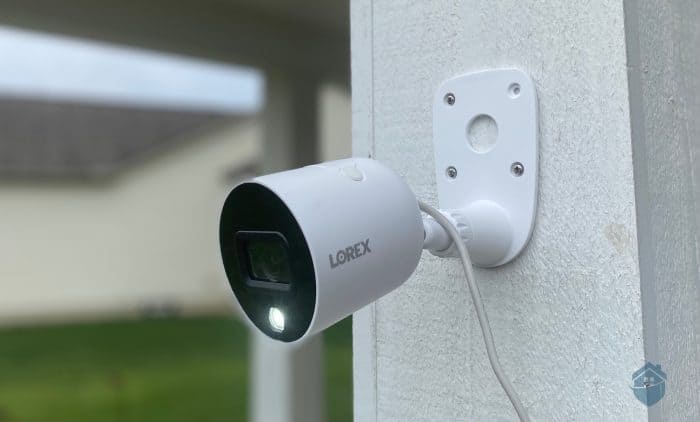
Lorex 4K Outdoor Camera
SecureScore™: 9.2/10
Lorex has a camera for every budget and security requirement. Their top-of-the-line 4K surveillance cameras now come with state-of-the-art facial recognition — as long as you have a local recording device.
View Packages Links to Lorex
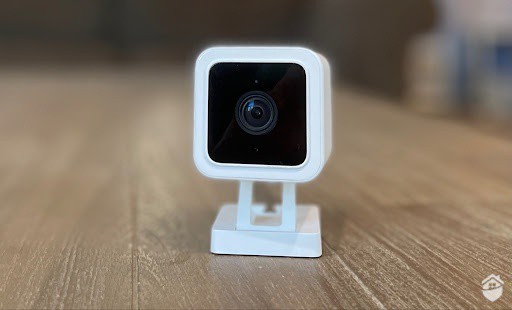
Wyze Cam v3
SecureScore™: 8.7/10
The Wyze Cam v3 is one of the cheapest top models we’ve tested. Now, with advanced face recognition and professional monitoring, it’s a true powerhouse.
View on Amazon Links to Amazon
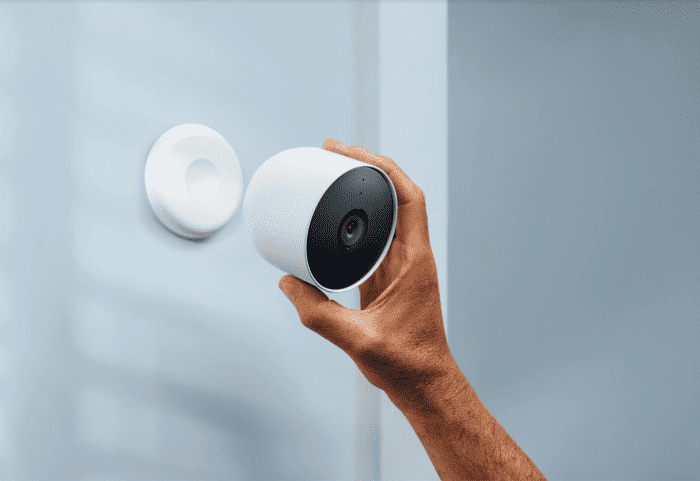
Nest Cam
SecureScore™: 8.5/10
The Nest Cam is our definition of hassle-free smart home security. It’s also one of the first DIY cameras to offer AI-powered facial recognition backed by Google.
View on Amazon Links to Amazon
Lorex 4K Outdoor Camera
9.2 / 10 SecureScore™
View Packages Links to Lorex
Editor’s Note: Facial recognition cameras can be on the pricier side, and it’s not always worth the money. We highly recommend vetting a camera based on the overall performance of its home security system. Check out our best home security systems page to learn more.
Once upon a time, a home security system was an alarm and a sensor. A thief tripped the alarm and wham! The alarm went off and he skedaddled. The idea worked, but without affordable hi-res security cameras, we were more or less blind.
All of that changed when DIY home security systems hit the scene. Brands like SimpliSafe, Lorex, and Ring introduced cameras that could pick up a ketchup stain from 25 feet away in the dark. Today, with the right facial recognition software under the hood, the very best home security cameras have gone one step further. Forget ketchup stains; these heavy hitters can tell us when Fred the UPS man is standing at our door.
While face recognition is certainly a huge advance in smart home security, not every camera offers the feature yet or gets it right. Here are our picks for this year’s top home security cameras with face recognition. After you’ve checked out our best-of list, scroll all the way down for the factors to look for when shopping for your next AI-equipped surveillance camera.
How Facial Recognition Works
Many of us are already familiar with facial recognition. We’ve used it to unlock our phones. In the case of our personal devices, the logistics are simple — one user, one photo.
If we scale up a bit to our home security systems, our surveillance cameras might have a database of 15 “friendly faces” they need to learn to recognize. After that — a lot after that — would be an entity like the FBI, which, according to the ACLU, has a facial recognition database of over 640 million of (our) faces.2
No matter the scale, the principle is the same. It works like this.
FYI: Despite what we’ve been seeing in Hollywood sci-fi films for years, 2D, not 3D, is what law enforcement uses for most face recognition. That’s because their databases are filled with 2D photos.
Face Recognition: 4 Things You Should Look for in a Home Security Camera
Face recognition is evolving rapidly, but it isn’t perfect yet. Considering its limitations at present, you should pay special attention to the following four factors and features when shopping for a camera equipped with an AI helper.
Night Vision Quality
The smartest cameras aren’t very good at identifying infrared images. So, if you’re counting on your security camera to keep watch over your property at night, look for a model that has color night vision. Lorex and Google’s Nest Cam (scroll up) both offer this feature. If you can do without facial recognition, Blink cameras and certain Arlo models have color night vision, too.
Streaming Speeds
A powerful ultra HD camera, like the Lorex 4K or the Reolink RLC-810A, won’t help you out much if your internet is slow. Those crisp, high-def faces will turn into a grainy soup on your app. Keep that in mind before you put facial recognition at the top of your home security shopping list.
Two-Way Audio
Ok, so a stranger is standing on your porch. You know because your brand new 4K eufyCam 3 with color night vision told you. Now what? Now you want to get them off your porch! To do that, you need something called two-way audio, which essentially turns your camera, or video doorbell, into a powerful walkie-talkie. This is a pretty common feature, but double check that your next AI-powered surveillance camera has it before you click purchase.
Cloud Storage Plans
Video storage might not be your top concern when shopping for a security camera, but there are situations where it matters. Take the Nest Cam, for instance. Without a paid storage plan, you get three hours of footage, which means that at six in the morning, anything you recorded at midnight will be gone. So, if facial recognition is a priority, choose a storage plan that lets you use it.
Pro Tip: If you’re wary of having your security footage uploaded to the cloud, and potentially being used by law enforcement or worse, choose a camera with local storage options, like Lorex or Eufy.
Final Thoughts
If you’re thinking about facial recognition for your next security camera, you’re thinking in the right direction. Pretty soon many of our neighbors are going to be using cameras with AI to tighten their circles of trust.
But there are concerns. Not everybody wants to have their photo filed away in a mini security database, for instance.3 That’s the ethical dimension. Technically, to run face recognition now, you need a high-res camera, above-average internet speeds, and a cloud storage/monitoring plan. In other words, it isn’t going to be cheap.
That said, you can find reasonably-priced cameras equipped to identify friendly faces, and our top picks are a great starting point.
FAQs
A camera that can detect faces distinguishes them from a vehicle, package, or pet. Not very helpful if you want to know when your kids are home from school. A camera with facial recognition, on the other hand, uses a database of images you feed it to identify faces you trust.
Only a handful of top brands currently offer this feature — Lorex, Google, Wyze, and Eufy are our top picks. If you’re not sure, you can check your app settings. The facial recognition toggle should be near your package, pet, and vehicle detection controls.
Facial recognition is rarely 100 percent accurate right out the gate. The more often people appear — and the more images you teach your camera with — the higher the accuracy. Over time, your AI-powered camera should get pretty good at identifying people you trust and weeding out the loiterers.
If you purchase a Google Nest Cam with cloud storage, the answer is yes. Your data is now public. But if you choose a camera with a local recording device, like the Lorex 4K DVR with Smart Motion Detection, your data remains private.
In order to use face recognition at night, you need a camera with color night vision. Lorex, Google (Nest Cam), Blink, and Arlo all have models that can see colors in the dark. Here’s a full list of our favorite night vision cameras of 2025. If you’re going the hardwired route, check out Vivint home security systems, which also offer facial recognition.
Alternative Article
The Best Facial Recognition Cameras of 2025: Smarter Security for Your Home
As we advance through 2025, security cameras are no longer just passive recorders; they have become intelligent guardians of our homes. The most significant leap in this evolution is the refinement of facial recognition technology. Today’s top cameras can distinguish between family members, friends, delivery personnel, and unknown strangers, dramatically reducing false alarms and providing you with highly specific, actionable alerts.
This guide breaks down the best facial recognition cameras on the market in 2025, helping you choose the right model for your security needs.
Top Picks for the Best Facial Recognition Cameras in 2025
After a thorough analysis of expert reviews, user feedback, and technological advancements, here are the standout facial recognition cameras of the year.
| Rank | Model | Category | Key Features | Average Price |
|---|---|---|---|---|
| 1 | Google Nest Cam (2nd Gen) | Best Overall | Superior facial recognition (Familiar Faces), 24/7 recording option with Nest Aware, excellent video quality (1080p HDR), seamless Google Home integration, on-device processing. | $180 – $250 |
| 2 | Arlo Pro 5S 2K | Best Wire-Free Option | 2K video with HDR, color night vision, integrated spotlight, wide 160-degree viewing angle, dual-band Wi-Fi support, strong smart home compatibility. | $250 – $300 |
| 3 | eufyCam S330 (eufy Edge) | Best for Local Storage | BionicMind™ AI for self-learning facial recognition, 4K resolution, solar-powered charging (Everlasting Power), no mandatory monthly fees with HomeBase 3 storage. | $550 – $650 (Kit) |
| 4 | Ring Video Doorbell Pro 2 | Best Doorbell Camera | Advanced motion detection (3D Motion Detection & Bird’s Eye View), 1536p HD+ video, person alerts, Pre-Roll feature, seamless integration with the Amazon Alexa ecosystem. | $250 – $280 |
.
In-Depth Look at the Top Contenders
1. Google Nest Cam (2nd Gen): The Smartest Face in the Crowd
Google’s Nest Cam continues to dominate the facial recognition space in 2025. Its Familiar Faces feature, part of the Nest Aware subscription, is arguably the most accurate and user-friendly on the market. It excels at learning who belongs at your home and who doesn’t, sending you specific alerts like “Jane is at the door.” With improved on-device processing, the 2nd Gen model can differentiate between people, animals, and vehicles even without a subscription, though Familiar Faces requires one. The camera’s 1080p HDR video and seamless integration with the Google Home ecosystem make it the top choice for those seeking intelligent, reliable security.
2. Arlo Pro 5S 2K: Power, Flexibility, and Precision
For those who want a premium, wire-free experience, the Arlo Pro 5S 2K is a top-tier option. While its facial recognition requires an Arlo Secure subscription, the system is powerful and allows for a high degree of customization. The camera’s standout features include stunning 2K HDR video, color night vision, and an integrated spotlight that deters intruders. Its dual-band Wi-Fi support ensures a more stable connection, a common pain point for wireless cameras. If you want a flexible, high-performance camera that works well with multiple smart home platforms, the Arlo Pro 5S is an excellent investment.
3. eufyCam S330 (eufy Edge Security System): Subscription-Free Intelligence
Eufy’s commitment to privacy and local storage makes the eufyCam S330 system a compelling choice. Its BionicMind™ AI runs on the included HomeBase 3, meaning your facial recognition data is stored locally, not in the cloud. The system learns and becomes more accurate over time, and crucially, this advanced feature is available without any mandatory monthly fees. With crystal-clear 4K resolution and integrated solar panels on the cameras for “Everlasting Power,” this system is ideal for users who want top-of-the-line features without long-term subscription costs.
4. Ring Video Doorbell Pro 2: The Smartest Welcome
While many Ring products offer person detection, the Video Doorbell Pro 2 takes it to the next level with advanced motion and alert features. Integrated with the Amazon ecosystem, it uses its powerful hardware to provide highly accurate person alerts right out of the box. Its unique 3D Motion Detection and Bird’s Eye View features allow you to pinpoint exactly where and when an event occurred on your property. For those invested in Alexa and seeking the best front-door security with reliable person identification, the Pro 2 is the clear winner.
Key Considerations Before Buying a Facial Recognition Camera
By prioritizing these features, you can select a facial recognition camera that not only enhances your security but also provides the smart, specific, and clutter-free notifications that define the modern smart home of 2025.
